 ShareOne Reviews
Outcome data
Brave Thinking Institute: what 11 recorded interviews report
11 people recorded an interview about Brave Thinking Institute. more clients, leads or patients was the most commonly volunteered theme, appearing in 6 interviews. The themes were volunteered in open-ended interviews, not selected from a checklist.
Interviews recorded 2025-02-24 to 2025-08-01. 0 of 11 interviews included a timeframe. Read the method.
Individual results vary. This is one customer's first-hand account of their own experience, recorded on camera and published unedited. It is not medical advice, and nothing here is intended to diagnose, treat, cure, or prevent any condition. Talk to a qualified healthcare professional before making decisions about your health.
Changes customers chose to talk about
Based on 11 open-ended customer interviews. These are themes people mentioned without being asked to rate every possible outcome. If someone did not mention a change, that does not mean it did not happen.
| Volunteered theme | Interview mentions |
|---|---|
| more clients, leads or patients | 6 |
| feeling heard and supported by the provider | 4 |
| better family or relationship life | 3 |
| more confidence in the decision | 2 |
| revenue or income growth | 2 |
| more energy through the day | 1 |
| sharper focus or mental clarity | 1 |
| clearer systems and processes | 1 |
Source interviews
 WatchOvercoming Fear of Visibility and Dating After 20 Years AloneKathy Carlson/Young used Brave Thinking Institute’s Manifest Your Man program to transition from self-sacrifice to prioritizing her own love life after 20 years of being single. Through one-on-one coaching and VIP fireside chats, she successfully overcame fea…Kathy Carlson/Young · Brave Thinking Institute
 WatchJulianne M Forbes Achieves Tremendous Confidence and Relationship Clarity Through Self-Love and CoachingJulianne M Forbes transformed her personal life through Brave Thinking Institute’s Manifest Your Man program and one-on-one coaching. By shifting to a self-love paradigm and utilizing a year’s worth of lessons on feminine energy and communication, she gained…Julianne M Forbes · Brave Thinking Institute
 WatchDiscovering Deeper Self-Relationship and Personal Growth Through Relationship Immersion TrainingKarie Cassell credits Brave Thinking Institute for a powerful transformation during their Relationship Immersion Training. Beyond improving external connections, Cassell discovered deeper layers of her relationship with herself, allowing her to "give from an…Karie Cassell · Brave Thinking Institute
 WatchFrom Self-Doubt to a New Love Relationship Through Self-Love FoundationsHarriet Lemberger-Schor credits Brave Thinking Institute for a total relationship transformation. By attending the Love and Relationships Immersion, she transitioned from lacking self-love to entering a new romantic relationship. She successfully balanced her…Harriet Lemberger-Schor · Brave Thinking Institute
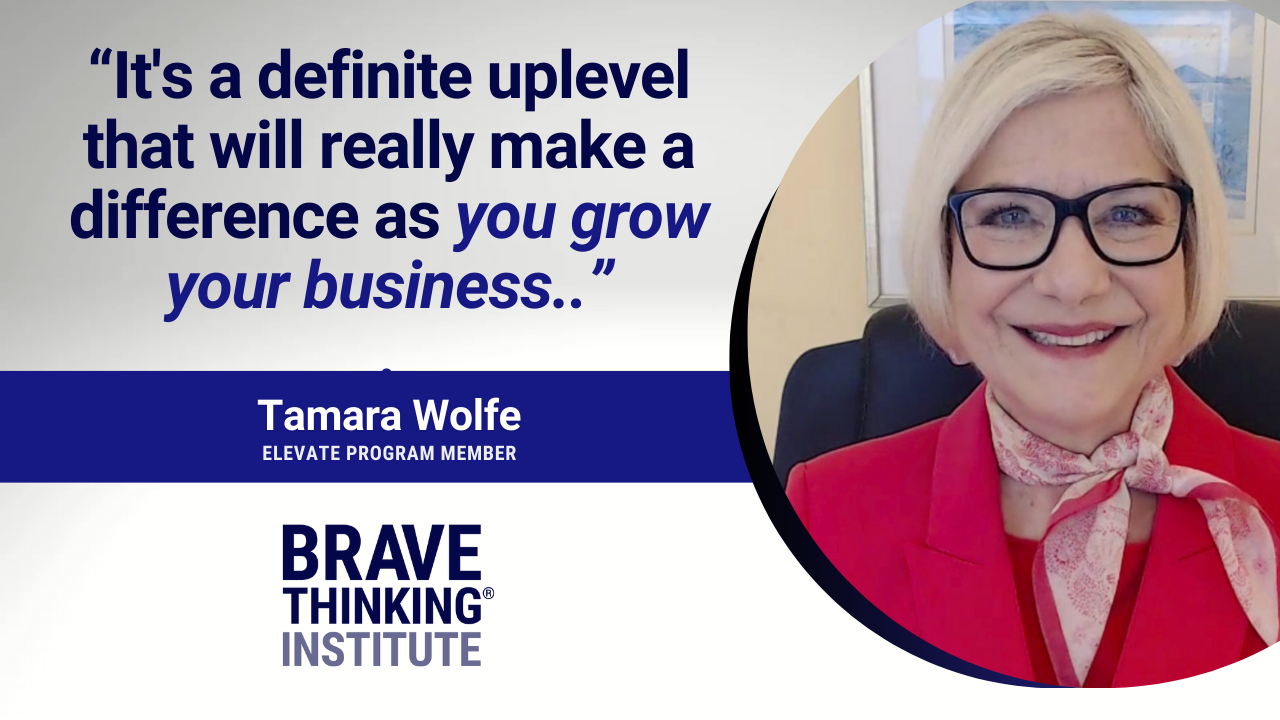 WatchTamara Wolfe Generated $17,000 From One Event and Tripled Her IncomeTamara Wolfe, a Life Mastery Consultant reviewing Brave Thinking Institute, achieved significant financial growth through the Elevate program. Wolfe reported generating over $17,000 from her first full-day event and $43,000 year-to-date, which doubled or trip…Tamara Wolfe · Brave Thinking Institute
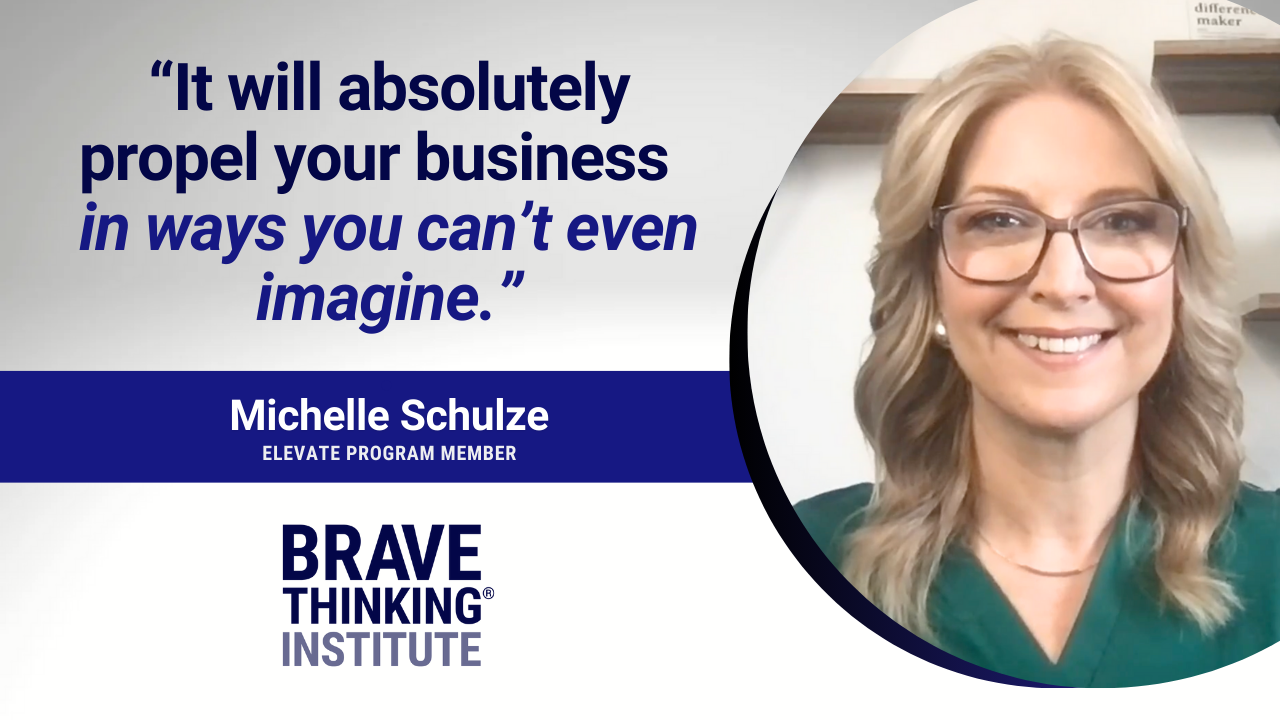 WatchMichelle Schulze Enrolled Seven New Clients and Generated Over $8,000 in IncomeMichelle Schulze achieved significant business growth with Brave Thinking Institute. By joining the Accelerator program, she overcame self-doubt to enroll seven new Dream Builder clients and generate over $8,000 in income. Michelle also began hosting bi-month…Michelle · Brave Thinking Institute
Counter-points people raised
- “And certainly, without being in the Manifest Your Man program, I really doubt I would yet be focusing on or even aware of how much I really am looking forward to being in partnership again.” Kathy Carlson/Young
- “Julianne M Forbes describes the program as a worthwhile investment in oneself rather than just a tool for attracting love. She emphasizes that it helps individuals feel worthwhile enough to pursue their heart's yearnings and provides a lasting toolbox of skil…” Julianne M Forbes
- “And before I joined, I was not feeling confident enough to do that.” Michelle
- “Carla Amthor initially hesitated due to 'common hour thinking' regarding the upfront dollar cost. However, she shifted her perspective to consider the cost of not attending, eventually viewing the programs as a regular, necessary part of her professional rout…” Carla Amthor